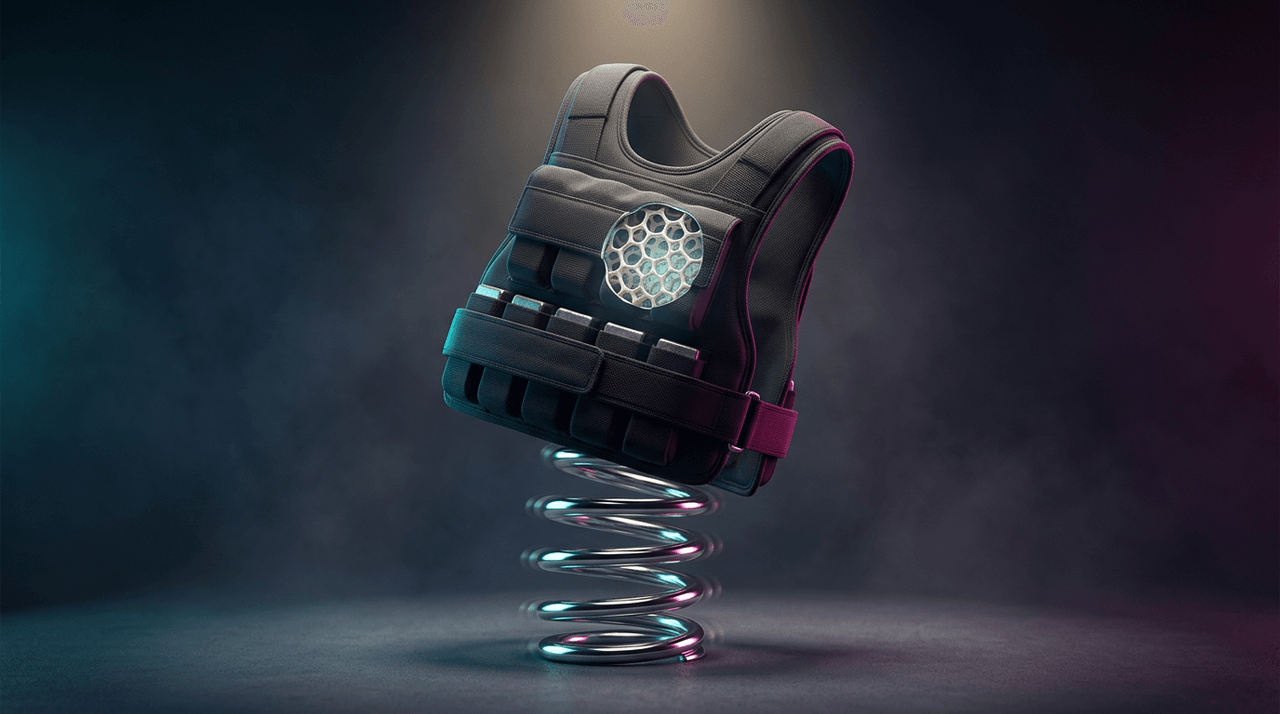
They're suddenly everywhere: on hiking trails, in grocery store aisles, across fitness influencer feeds promising stronger bones and faster metabolisms with zero extra gym effort. Weighted vests are having a moment. But a new study from Wake Forest University, published in Frontiers in Aging this March, offers a reality check worth reading before you add one to your cart. The vests may help protect hip bones during weight loss—but only if you're actually standing and walking while wearing them. Sitting with one on, it turns out, doesn't appear to do the trick.
What the New Study Actually Found
The research builds on the INVEST in Bone Health randomized controlled trial, which followed 150 older adults with overweight or obesity over 12 months. Participants, with an average age of about 66, were split into three groups: one pursued weight loss through diet alone, another added daily weighted vest use for around eight hours per day, and a third added structured resistance training. The vest group started unloaded and gradually added weight up to 10 percent of their initial body mass, replacing roughly 78 percent of what they lost.
All three groups lost similar amounts of weight, between 9 and 11 percent of their body weight. The overall finding? Neither the vest nor resistance training preserved hip bone density better than dieting alone. Disappointing—but not the full story.
When researchers dug into how participants actually spent their waking hours, something interesting emerged. Vest wearers who spent more time standing and stepping showed positive changes in hip bone mineral density. In the diet-only group, more upright time was linked to worse bone density. The interaction was statistically significant—not a fluke.
Why Movement Changes the Equation
Bones respond to being loaded. When you stand or walk carrying extra weight, that mechanical pressure stimulates bone-forming activity. When you sit, even with a vest cinched tight, that signal fades. Lead author Jason Fanning, an associate professor at Wake Forest, put it plainly: "A vest can be a great tool. But, like any tool, it's not going to do the work for you." The fantasy of bone health by accessorizing turns out to require one crucial ingredient: getting up and moving.
Who Might Benefit Most
The evidence points most clearly to older adults, roughly 60 and up, who are living with overweight or obesity and intentionally losing around 10 percent of their body weight. If you're mobile, able to stand and walk regularly, and looking for a way to potentially offset the bone loss that often accompanies shedding pounds, a vest worn actively may offer a modest edge. Related Wake Forest research also found vests can improve strength, sit-to-stand performance, and balance, and may support longer-term weight maintenance. More than half of participants in the original trial reported no major issues with daily wear.
Who Should Be Cautious
Not everyone should rush to add load to their frame. If you have balance problems, a high fall risk, severe arthritis, significant joint pain in your back, hips, knees, or neck, heart disease, uncontrolled blood pressure, severe osteoporosis, or conditions affecting cognitive function, talk to a clinician before experimenting. The INVEST trial explicitly excluded people with severe cardiometabolic disease, major musculoskeletal impairments, cognitive issues, and recent osteoporosis medication use. Safety screening is not a suggestion.
Practical, No-Hype Guidance
If a weighted vest sounds right for your situation, start conservatively:
- Begin with an unloaded vest or just 1 to 5 percent of your body weight
- Increase gradually; don't exceed 10 percent of your body weight without professional guidance
- Wear it during the active parts of your day—walking, standing tasks, errands—not while sitting at a desk or watching television
- Stop if you experience pain, dizziness, or postural strain
- Treat it as one piece of a broader approach, not a replacement for resistance training, good nutrition, or overall physical activity
The Bottom Line
Weighted vests have earned some of the hype—but not all of it. The new Wake Forest evidence offers a genuinely encouraging, if narrow, signal: they may help protect hip bones during weight loss for older adults who stay active while wearing them. Passive bone health by accessory is not on the menu. The research team is already designing follow-up studies to test whether encouraging more movement amplifies the vest's benefits. For now, it remains a tool that adds load—but your body only cashes that check when you get up and move.
You may also like

Why This 91-year-old Hike Lands Now
Can Movement Snacks Offset a Desk Day?

Which Face Sunscreen Fits Your Routine?

Can Younger Workers Afford Micro-retirement?

What If Plastic Free July Were Smaller?