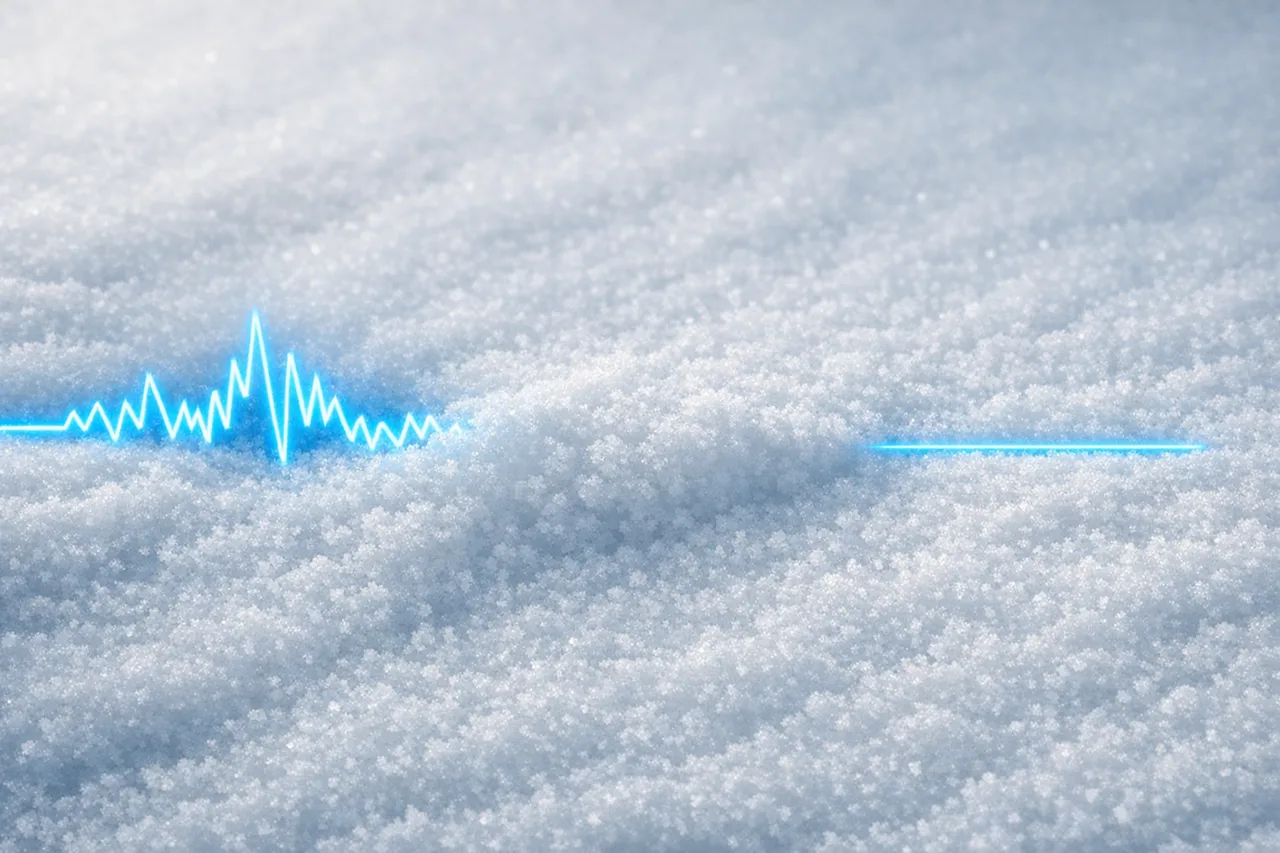
On the morning of December 25, 2024, New Yorkers woke up to something rare: at least one inch of snow resting on the Central Park observatory grounds. It was the city's first official white Christmas since 2009. While the visual change was striking, the most profound shift for millions of residents was something they heard, or rather, didn't hear.
The usual cacophony of sirens, subway rattles, and the relentless hum of eight million people suddenly felt softer. It was as if someone had turned the city's master volume knob down by half. While holiday nostalgia plays a role in that feeling of peace, there's a fascinating mechanical reason for this hush: snow acoustics.
It's Not Just Vibes—It's Physics
If you've ever stood in a recording studio, you've likely noticed the thick foam panels lining the walls. These panels are designed for sound absorption, trapping noise so it doesn't bounce back as an echo. Freshly fallen snow works exactly the same way.
Scientific research shows that fresh, fluffy snow can absorb between 60% and 90% of ambient sound. For comparison, common urban materials like asphalt and concrete absorb only about 10%. When you walk through New York during a snowfall, you're essentially walking inside a giant, nature-made sound booth. This is nature's soundproofing at work.
The Snowflake as Acoustic Foam
How does a delicate ice crystal accomplish such remarkable sound absorption? The secret is in the structure. Fresh snow isn't a solid block of ice. Instead, it's an intricate network of crystal flakes that trap massive amounts of air. A fresh snowbank can be 80% to 95% air.
When sound waves from a distant car horn or construction site hit a patch of fresh snow, they don't just bounce off. Instead, they travel deep into the spaces between the flakes. As the air molecules and sound waves move through these narrow channels, they rub against the edges of the snowflakes. This process, called viscous friction, converts the sound's energy into tiny amounts of heat. The sound literally loses its power while navigating the snowflake maze.
Think of it like breathing through a thick wool scarf. The air has to work harder to move through the fibers, losing energy along the way.
Why the NYC Volume Drops So Dramatically
New York City typically exists at a baseline of 70 to 85 decibels—roughly the same as a vacuum cleaner running inside your living room all day. A heavy snowfall can drop the perceived noise level by 10 to 15 decibels.
Here's the remarkable part: in the world of acoustics, a 10-decibel drop is perceived by the human ear as the volume being cut in half.
Snow is particularly effective at dampening high-frequency sounds—the sharp screeches and clatters that give the city its characteristic edge. While you might still hear a low rumble from the subway beneath the ground, the high-pitched chaos of the surface disappears first. The city doesn't go silent. It loses its harshness.
Why the "Fresh" Part Matters
This acoustic sanctuary is often as fleeting as a holiday gift. For snow to act as nature's soundproofing, it must remain porous. Once it starts to melt, gets packed down by foot traffic, or refreezes into ice, the air pockets disappear.
When snow turns to ice or compacted slush, it stops being an absorber and starts being a reflector. Sound waves bounce off the hard surface of ice just as they do off concrete. This is why the magical silence of a blizzard often turns into the cold, clattering reality of the morning commute a few days later.
The Mental Health Benefits of Silence
Beyond the physics, this auditory break provides a necessary reset for our brains. Modern urban life demands constant "directed attention"—the effortful focus required to filter out noise, stay vigilant, and navigate competing stimuli. This cognitive resource is finite. When we drain it without recovery, we experience mental fatigue and elevated cortisol levels.
According to Attention Restoration Theory, environments that provide "soft fascination"—like the gentle sight and sound of falling snow—allow our brains to replenish this depleted resource. The stimuli are engaging but undemanding. They don't require effort to process.
Studies have shown that even two minutes of genuine silence can lower blood pressure and stabilize heart rates more effectively than some relaxation music. In a world that often treats constant noise and "the hustle" as requirements for productivity, the 2024 white Christmas gave New Yorkers permission to value quiet instead. It reminded us that silence isn't emptiness. It's space to notice what we've been missing.
Try the Snow Hush Ritual
If you find yourself in the middle of fresh snowfall, take advantage of this temporary acoustic sanctuary. Step away from your phone and headphones for just two minutes. Stand still and identify the furthest sound you can hear. You'll likely notice small things—a bird's wings, a neighbor's footsteps—that are usually drowned out by the city's roar.
Then notice your own breathing. What changes when the world stops competing for your attention?
A Collective Memory Worth Protecting
The 2024 NYC white Christmas was a milestone that broke a 15-year drought. It reminded us that while we can't control the volume of the world, physics occasionally steps in to give us a much-needed moment of peace. The hush you felt wasn't magic. It was millions of tiny snowflakes doing what they do best: creating space for silence.
And in a city that never stops, that silence is worth noticing.
Sources
- ABC News (NYC first white Christmas since 2009; NWS definition): https://abcnews.go.com/US/white-christmas-new-york-city-1st-time-15/story?id=117102237
- Fox Weather (NYC first white Christmas in 15 years; Central Park measurement context): https://www.foxweather.com/weather-news/new-york-city-has-first-white-christmas-15-years
- Acoustic Bulletin (snowflake structure; absorption coefficient range): https://www.acousticbulletin.com/the-structure-of-snowflakes-make-snow-absorb-sound-freshly-fallen-snow-is-an-effective-sound-dampener/
- Fresh snow absorption mechanisms (viscous/thermal losses) PDF: https://aichat.physics.ucla.edu/fetch.php/scholarship/LShPp1/Fresh%20Snow%20Absorbs%20Sound.pdf
- Silence + stress/health overview (supporting claim about brief silence): https://pmc.ncbi.nlm.nih.gov/articles/PMC9678082/
- Attention Restoration Theory (non-visual/auditory restoration angle): https://www.frontiersin.org/journals/psychology/articles/10.3389/fpsyg.2025.1556672/full
- Nature immersion + "soft fascination" support: https://www.nature.com/articles/s41598-024-52205-1
You may also like
Rocks Making Oxygen in Total Darkness

A Detailed Guide to Using Lime in Water Treatment

What Skills and Knowledge Does the MCAT Test?
Why This 91-year-old Hike Lands Now

Can Younger Workers Afford Micro-retirement?